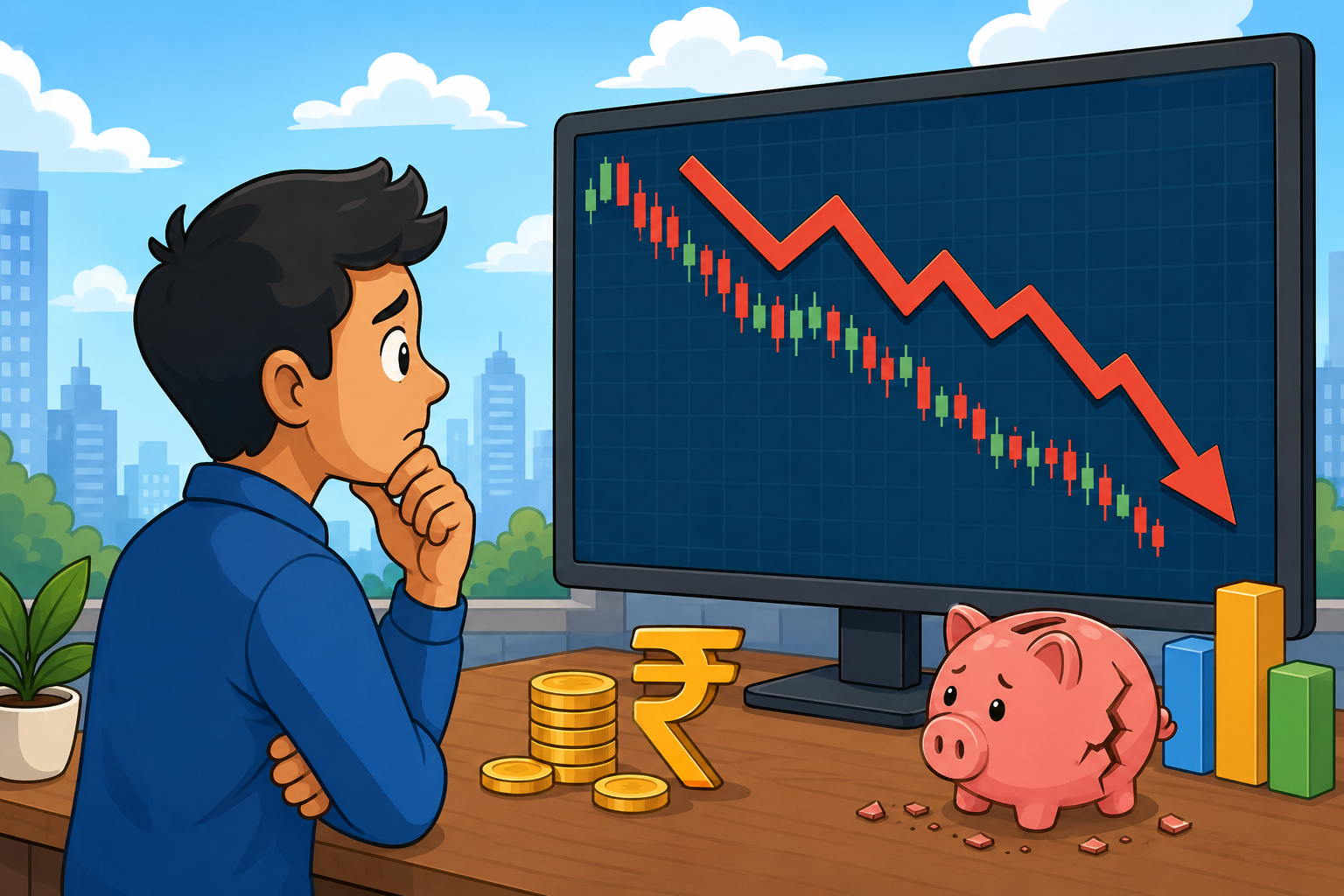
Many people ask this question when the market falls:
“If my stock lost ₹10,000 today… where did that money go? Who took it?”
It feels like the money has vanished into thin air. But in most cases, it hasn’t gone to anyone. It simply doesn’t exist anymore—at least not in the way you imagine.
Price Is Just an Agreement
A stock price is not a box of money stored somewhere. It is just the last price at which two people agreed to trade.
- One person said: “I will sell at ₹100.”
- Another person said: “I will buy at ₹100.”
- A trade happened, and the price became ₹100.
Now imagine tomorrow someone sells at ₹90. The new price becomes ₹90.
If you own 100 shares:
- Yesterday value: 100 × ₹100 = ₹10,000
- Today value: 100 × ₹90 = ₹9,000
You lost ₹1,000 on paper. But did anyone gain your ₹1,000? No. The market just revalued your shares lower.
So When Does Money Actually Move?
Money only changes hands when a trade happens.
Imagine you bought 100 shares at ₹100 each. You spent ₹10,000.
A few months later, the market price falls to ₹80 because buyers are no longer willing to pay ₹100.
At this point:
- Your portfolio now shows a value of ₹8,000.
- You haven't lost any cash yet because you still own the shares.
- The ₹2,000 is an unrealized (paper) loss./li>
Now suppose you decide to sell.
A buyer agrees to purchase your 100 shares for ₹80 each, paying you ₹8,000.
Here's what happened:
- You originally paid ₹10,000.
- You received ₹8,000 when you sold.
- Your realized loss is ₹2,000.
Did the buyer make ₹2,000? No.
The buyer simply bought shares at today's market price. If the price later rises to ₹100 and they sell, they will make a profit. If it falls to ₹60, they will lose money instead.
Your ₹2,000 loss wasn't transferred to the buyer. It came from selling an asset for less than you originally paid.
Your loss is real only because you sold lower than you bought. Until you sell, it’s just a change in value, not a transfer of money.
Think of It Like a House
Imagine you bought a house for ₹50 lakhs.
- Today, someone says houses in your area are worth ₹45 lakhs.
- Have you lost ₹5 lakhs?
Not really—unless you sell it at that price. The house didn’t give ₹5 lakhs to anyone. The market simply changed its opinion about the value.
What About Big Market Crashes?
When markets crash, billions seem to “disappear”. What actually happens is that fear rises, buyers offer lower prices, and the total market value drops. That “lost” value is just old expectations being replaced by new, lower ones.
The Simple Truth
- Your portfolio value falls.
- No one secretly “takes” that money.
- The market just decides your stocks are worth less right now.
“Yesterday people were ready to pay more.
Today, they are not.”